How often should you fly a job site for progress monitoring?
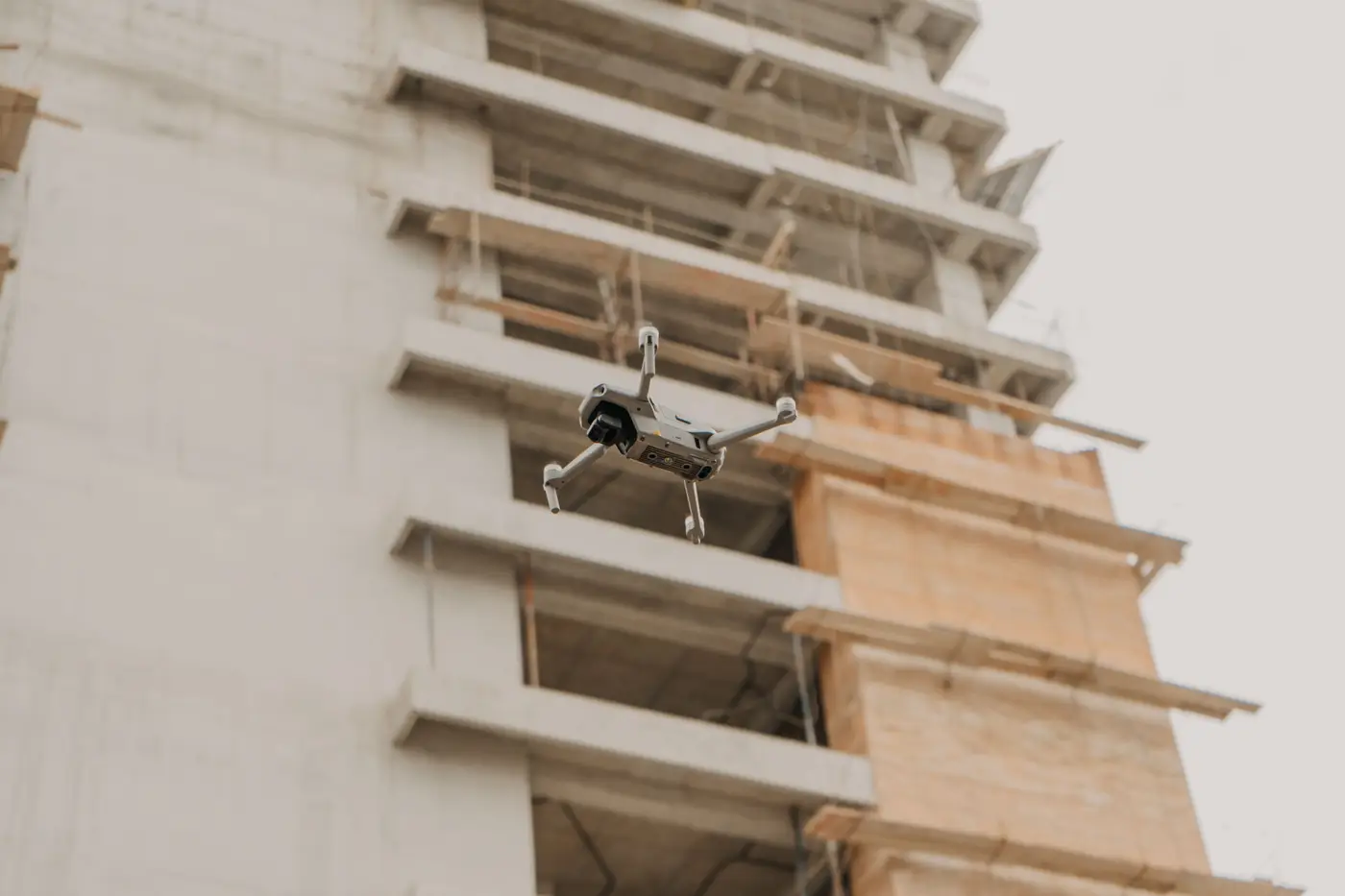
Every superintendent who's added drone flights to a project ends up asking the same question around week three: are we flying too often, or not often enough? The honest answer depends on what you're actually trying to catch.
If the goal is a pretty progress photo for the owner's monthly report, cadence barely matters. If the goal is catching a slab-on-grade that's 4 inches out of position before the next pour locks it in, cadence is the whole game.
What drives the right interval
Three things set the clock, not a rule of thumb from a drone sales rep.
How fast the work gets covered up. Underground utilities, rebar before pour, MEP rough-in before drywall. Anything that disappears under concrete or ceiling tile within a couple weeks needs a flight before it closes, not after. A monthly flight that lands two days after a pour is a monthly flight that missed the window entirely.
How much schedule risk is riding on this phase. Early sitework and foundations carry more deviation risk than a steady structural steel erection sequence. Flying weekly through foundations and tapering to monthly once the building is enclosed is normal, not inconsistent.
What the contract and the design model require you to verify. If your QA process checks every elevation and every grid line against the model at set milestones, your flight cadence should line up with those milestones, not run on a separate clock.
Most commercial and infrastructure projects settle on monthly as the baseline, with targeted flights added around pours, foundation sign-off, and other points where rework gets expensive fast. That's also the cadence most owners can budget and staff for without turning site monitoring into a part-time job for someone on the BIM team.
Weekly vs. biweekly vs. monthly, honestly
Weekly flights give you the tightest net. They also generate more data than most QA teams can review in a week, and on a lot of projects the extra flights just pile up unreviewed. Weekly makes sense for a short, high-risk window: foundation pours, a tight utility corridor, anything where a week of drift is a week too many.
Biweekly is a reasonable compromise on fast-moving civil and earthwork phases, where grading and cut/fill change enough between flights to matter but a weekly schedule would be overkill.
Monthly is the default for a reason. It matches how most design teams update their models, it gives QA enough new progress to justify a review session, and it still catches an out-of-tolerance column or a misaligned footing while the trade responsible is still mobilized on site. Compare that to waiting for the as-built survey at closeout, months after the crew responsible for the deviation has moved to the next job.
Matching cadence to what you'll do with the data
A flight schedule is only as useful as the review that happens after it. If nobody's registering the capture against the design model and flagging what's out of tolerance, flying more often just means more unreviewed point clouds sitting on a drive. The cadence question and the "who checks this against the model" question are the same question, really.
That's the gap As-Built Compare is built around: a monthly drone pass registered to your model, with out-of-tolerance elements flagged before the next phase buries them. It's early-access and pilot-stage, built around exactly this monthly cadence and the out-of-tolerance check that goes with it.
If a monthly flight that gets checked against your model sounds more useful than another folder of orthomosaics, that's the use case this site is built around.